

Preparing for board exams can be overwhelming, especially when time is limited. A well-structured 30-day study plan can help students organize their study sessions, revise effectively, and boost their confidence. This guide is tailored for Pakistani students aiming to maximize their marks in matric and intermediate exams.
Why a 30-Day Study Plan is Crucial
Board exams test your understanding, memory, and exam strategy. Without a plan, students often cram at the last minute, leading to stress and lower marks. A 30-day study plan helps you:
- Prioritize important subjects
- Allocate time for revision and practice
- Improve retention of concepts
- Track progress and identify weak areas
Step 1: Assess Your Syllabus
Before creating a study schedule:
- List all subjects and chapters.
- Identify high-weightage topics from past papers.
- Highlight weak areas that require extra attention.
- Gather all study materials: textbooks, notes, past papers, and online resources.
Step 2: Divide Your 30 Days Effectively
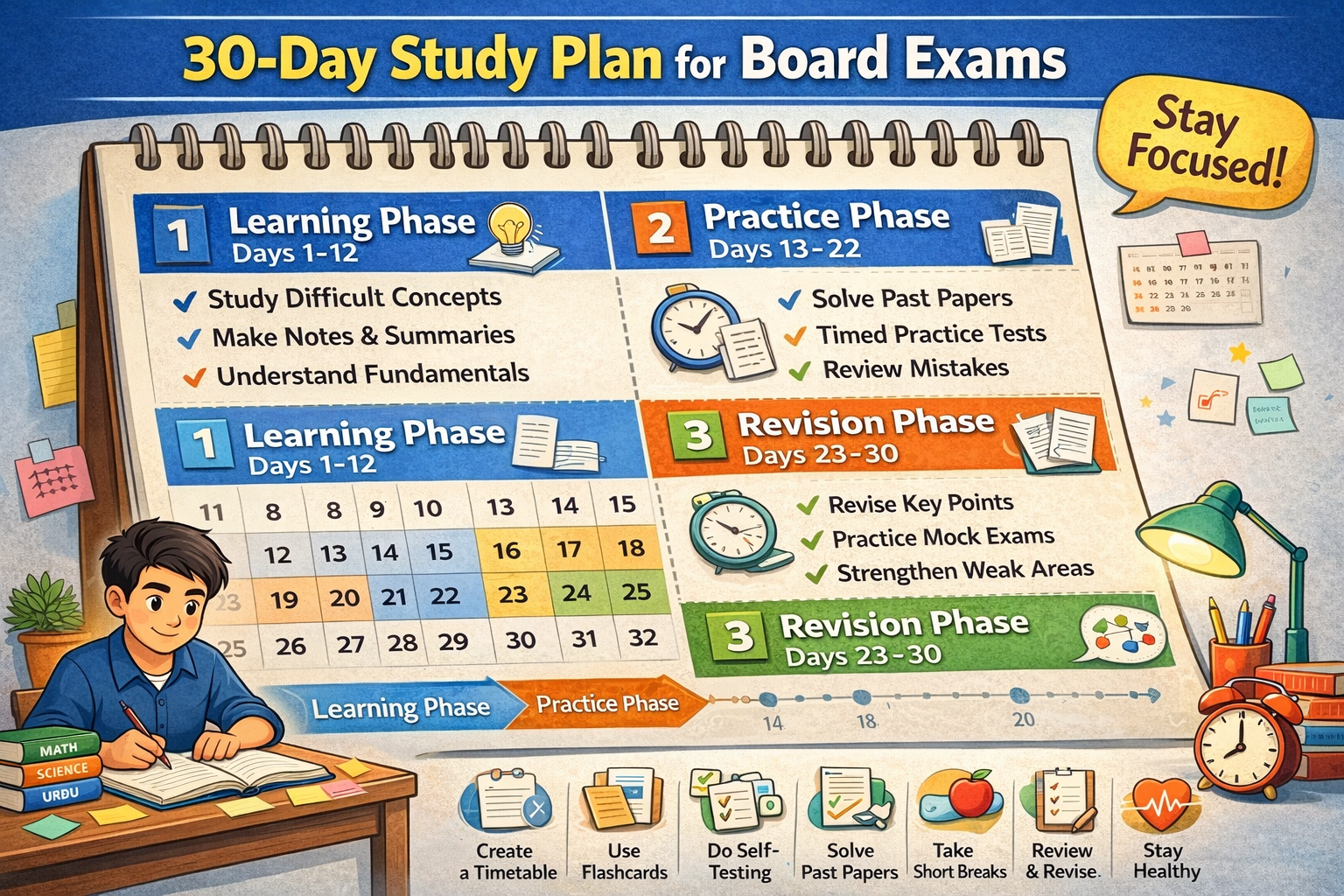
Break the month into three main phases:
1. Learning Phase (Days 1–12)
- Focus on understanding difficult concepts.
- Allocate 2–3 hours per subject daily.
- Use active learning techniques: note-making, mind maps, and summary charts.
2. Practice Phase (Days 13–22)
- Solve past papers and sample questions.
- Practice writing full answers under timed conditions.
- Identify repeated question patterns in board exams.
3. Revision Phase (Days 23–30)
- Focus on weak areas and short notes.
- Do at least two full mock exams.
- Avoid starting new topics; revise already studied material.
Step 3: Create a Daily Timetable
A daily timetable ensures proper time management:
| Time | Activity |
|---|---|
| 6:00–7:00 AM | Morning revision / flashcards |
| 7:00–8:00 AM | Breakfast & short break |
| 8:00–10:00 AM | Subject 1 (difficult topic) |
| 10:00–10:30 AM | Break / light snack |
| 10:30–12:30 PM | Subject 2 |
| 12:30–1:30 PM | Lunch & rest |
| 1:30–3:30 PM | Subject 3 |
| 3:30–4:00 PM | Break / physical activity |
| 4:00–6:00 PM | Past papers / practice questions |
| 6:00–7:00 PM | Dinner & relaxation |
| 7:00–9:00 PM | Evening revision / flashcards |
| 9:00–9:30 PM | Plan next day & light review |
Step 4: Use Active Revision Techniques
Passive reading is not enough. Students should use:
- Flashcards: For definitions, formulas, and key terms
- Mind maps: For linking concepts visually
- Self-testing: Practice recalling information without looking at notes
- Group study (optional): Discussing with friends to strengthen memory
Step 5: Avoid Common Mistakes
- Cramming last minute: Leads to stress and poor retention
- Skipping breaks: Can reduce concentration
- Ignoring past papers: These help understand board exam patterns
- Studying without planning: Wastes valuable time
Step 6: Stay Healthy and Focused
- Maintain a regular sleep schedule (7–8 hours per night)
- Eat nutritious meals to fuel the brain
- Include short exercise or stretching breaks
- Stay hydrated and minimize phone/social media distractions
Step 7: Track Your Progress
- At the end of each week, review what you’ve covered
- Adjust your plan for difficult subjects or missed topics
- Celebrate small achievements to stay motivated
Also Read About: Time Management Tips for Students During Exams
FAQs
Can a 30-day plan help me score high in board exams?
Yes, if followed consistently with proper revision and practice.
How much time should I spend on each subject daily?
Ideally 2–3 hours for difficult subjects and 1–2 hours for easier ones.
Should I include breaks in my study plan?
Yes, short breaks between study sessions improve focus and retention.
Is group study recommended in the 30-day plan?
It can be helpful for discussion, but individual practice is more important.
How do I revise effectively in the last 5 days?
Focus on flashcards, past papers, and weak areas; avoid starting new topics.
Conclusion
A 30-day study plan is not just about hours spent; it’s about smart preparation. Following a structured plan, practicing consistently, and revising effectively can help students maximize their marks in board exams. Remember, it’s important to stay calm, healthy, and confident throughout the preparation period.