
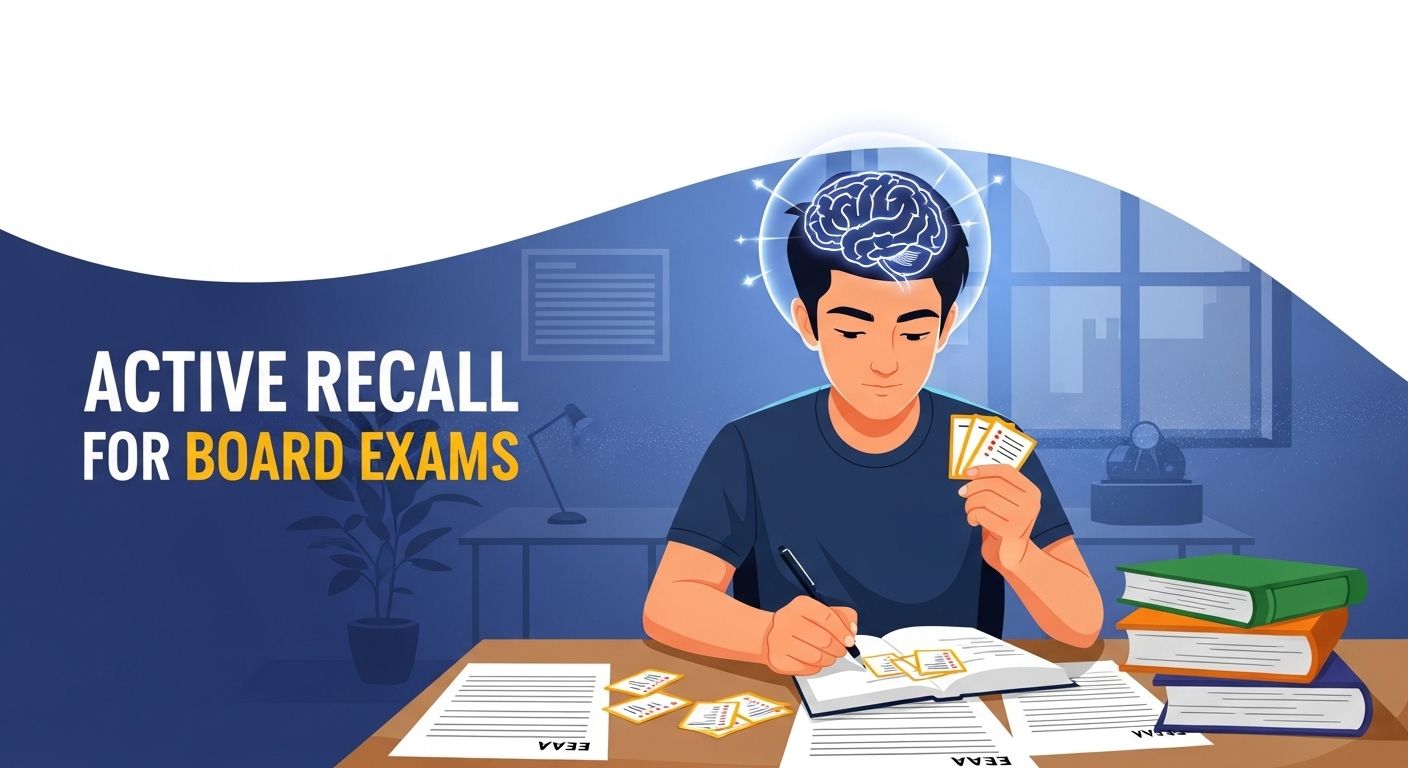
Preparing for board exams can feel overwhelming for many students in Pakistan. Long textbooks, multiple subjects, and limited time often create stress. But what if there was a smarter way to study — one that improves memory, saves time, and increases exam confidence?
The Active recall study method is one of the most effective learning techniques used by toppers and high achievers worldwide. Instead of passively reading notes again and again, active recall forces your brain to retrieve information, which strengthens memory and understanding.
In this article, you will learn how to study effectively with active recall, practical strategies, mistakes to avoid, and step-by-step guidance specifically for board exam students.
What Is Active Recall Studying?
Active recall is a learning technique where you test yourself instead of re-reading material.
For example:
❌ Passive Study: Reading a chapter repeatedly
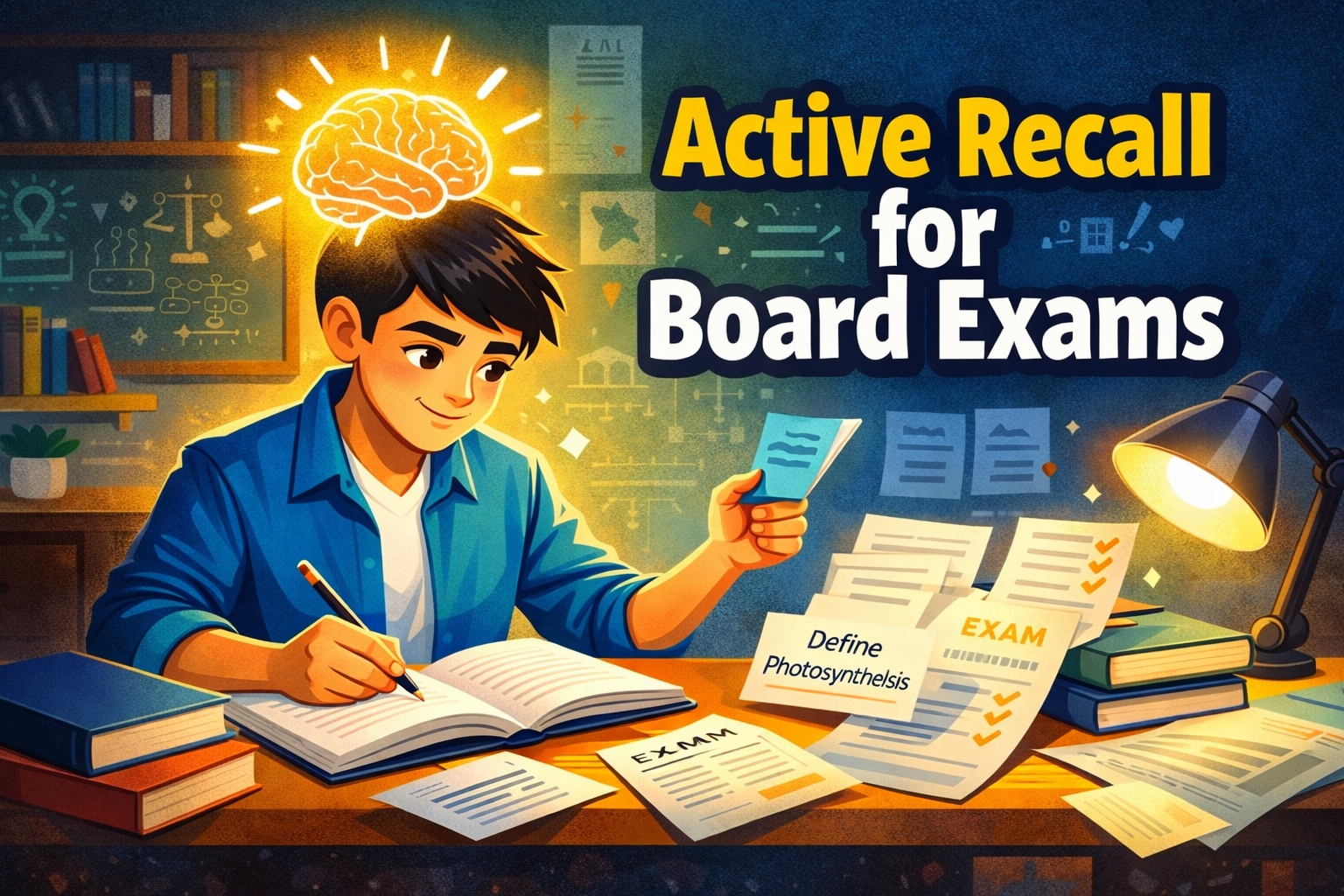
✅ Active Recall: Closing the book and writing what you remember
When your brain struggles to remember information, it builds stronger memory connections. This makes it easier to recall answers during exams.
Research shows students who use retrieval practice perform better than those who only read notes.
Why Active Recall Is Perfect for Board Exams
Board exams in Pakistan often require:
- Concept understanding
- Long answers
- Definitions and diagrams
- Problem solving
Active recall helps with all of these because it trains your brain for exam-like thinking.
Benefits for Students
- Improves long-term memory
- Reduces forgetting
- Saves study time
- Increases confidence
- Helps identify weak areas quickly
How Do You Study Effectively With Active Recall?
Here is a simple step-by-step system students can follow.
Step 1: Study the Topic Once (Understanding Phase)
First, read the chapter carefully and understand the concepts.
Do not memorize yet.
Focus on:
- Headings
- Important terms
- Diagrams
- Examples
Step 2: Close the Book and Recall
After studying for 10–15 minutes:
- Close your book
- Take a blank paper
- Write everything you remember
This is the most important step.
Step 3: Check and Correct Mistakes
Open your book again and compare:
- What you forgot
- What you wrote wrong
- Missing points
Correction strengthens learning.
Step 4: Repeat After Time Gaps
Active recall works best with spaced repetition.
Repeat recall after:
- 1 day
- 3 days
- 1 week
This moves knowledge into long-term memory.
Practical Active Recall Techniques for Students
You can use multiple methods depending on your subject.
1. Flashcards Method
Write:
- Question on one side
- Answer on the other side
Example:
Q: Define photosynthesis
A: Process by which plants make food using sunlight
Flashcards are great for:
- Biology terms
- Chemistry reactions
- Definitions
- Vocabulary
2. Blurting Technique (Topper Strategy)
This is very popular among high scorers.
Steps:
- Study a topic
- Close the book
- Write everything you remember on paper
- Check mistakes
- Repeat
This method improves memory very fast.
3. Practice Questions Method
Instead of reading notes repeatedly:
- Solve past papers
- Attempt MCQs
- Write long questions from memory
Board exams often repeat concepts, so this method is powerful.
4. Teaching Others Method
If you can teach a topic, you truly understand it.
Try explaining concepts to:
- Friends
- Siblings
- Even yourself (out loud)
Teaching activates deeper memory.
Active Recall Study Plan for Board Exam Students
Here is a simple weekly system.
| Day | Activity |
|---|---|
| Day 1 | Learn chapter + active recall |
| Day 2 | Recall again without notes |
| Day 4 | Solve questions |
| Day 7 | Final recall revision |
This pattern improves retention significantly.
Subjects Where Active Recall Works Best
Active recall can be used for almost every subject.
Science Subjects
- Biology diagrams
- Chemistry equations
- Physics formulas
Theory Subjects
- Islamiat
- Pakistan Studies
- English essays
- Urdu questions
Math
Even math benefits:
- Recall formulas
- Solve problems without looking at steps
Common Mistakes Students Should Avoid
Many students use active recall incorrectly.
Avoid these mistakes:
❌ Re-reading notes instead of recalling
❌ Looking at answers too quickly
❌ Skipping revision intervals
❌ Studying for long hours without testing yourself
❌ Memorizing without understanding
Remember: struggle during recall is good — it means learning is happening.
How Active Recall Reduces Exam Anxiety
Confidence comes from preparation.
When you repeatedly retrieve information from memory:
- Your brain feels familiar with content
- Exam stress reduces
- You panic less during papers
Students often report feeling more prepared after using this method.
Mini Tool: 5-Minute Active Recall Routine
Use this quick daily exercise:
- Study for 20 minutes
- Close book
- Write key points for 5 minutes
- Check mistakes
- Repeat later
Even short sessions can improve memory.
Motivation Tip for Pakistani Students
Many students think toppers study longer hours.
Reality: toppers study smarter.
Active recall allows you to:
- Study less time
- Remember more
- Score higher marks
Consistency matters more than intelligence.
FAQs
What is active recall studying?
Active recall is a technique where you test your memory by recalling information without looking at notes, which improves learning and retention.
How do you study effectively with active recall?
Study the topic once, close the book, write what you remember, check mistakes, and repeat after time gaps.
Is active recall good for board exams?
Yes, it is one of the best methods because board exams require memory, understanding, and problem-solving skills.
How many times should I use active recall?
At least 3–4 repetitions with gaps (1 day, 3 days, 1 week) for strong memory.
Can weak students use active recall?
Yes. In fact, it helps weak students more because it identifies gaps and improves understanding quickly.
Also Read About: Why Students Lose Focus and How to Fix It
Final Thoughts
The active recall study method for board exams is not complicated — but it requires discipline. Instead of reading notes again and again, train your brain to remember actively.
Start with one subject today and practice recall daily. Within weeks, you will notice better memory, faster revision, and improved confidence.