

Creating a structured daily study timetable is crucial for matric students in Pakistan to achieve top marks in board exams. With proper planning, students can manage their time effectively, revise all subjects thoroughly, and avoid last-minute stress. This article will guide you step-by-step to build a daily timetable, include subject-wise tips, and offer actionable strategies to maximize learning.
Why a Daily Study Timetable is Essential
A daily study plan is not just about writing down time slots. It is about organizing your study routine efficiently. Benefits include:
- Ensures all subjects are revised systematically.
- Helps students avoid cramming at the last moment.
- Builds discipline and regular study habits.
- Reduces exam anxiety by maintaining consistency.
For students aiming for high marks in class 9th and 10th board exams, following a timetable is the first step toward academic success.
Step-by-Step Guide to Creating a Daily Study Timetable
1. Assess Your Subjects and Syllabus
- List all subjects for your matric exams: Math, Science, English, Urdu, Islamiyat, Pakistan Studies.
- Break each subject into chapters or topics.
- Identify strong and weak subjects to allocate time accordingly.
2. Allocate Study Hours Wisely
- Aim for 5–6 focused study hours daily outside school.
- Divide sessions into morning, afternoon, and evening blocks.
- Include short breaks (5–10 minutes) between sessions to improve focus.
Example Timetable for Matric Students:
| Time | Activity/Subject |
|---|---|
| 6:00 AM – 7:00 AM | Morning revision (weak subject) |
| 7:00 AM – 7:30 AM | Breakfast & refreshment |
| 7:30 AM – 9:00 AM | Math practice |
| 9:00 AM – 10:30 AM | Science concepts review |
| 10:30 AM – 11:00 AM | Short break |
| 11:00 AM – 12:30 PM | English Literature / Grammar |
| 12:30 PM – 1:30 PM | Lunch & rest |
| 1:30 PM – 3:00 PM | Urdu / Islamiat |
| 3:00 PM – 3:15 PM | Tea break |
| 3:15 PM – 4:30 PM | Pakistan Studies / Social Studies |
| 4:30 PM – 6:00 PM | Solve past papers / practice tests |
| 6:00 PM – 6:30 PM | Dinner & short walk |
| 6:30 PM – 8:00 PM | Night revision (difficult topics) |
| 8:00 PM – 8:30 PM | Free time / relaxation |
| 8:30 PM – 9:30 PM | Quick review / flashcards |
| 9:30 PM | Sleep |
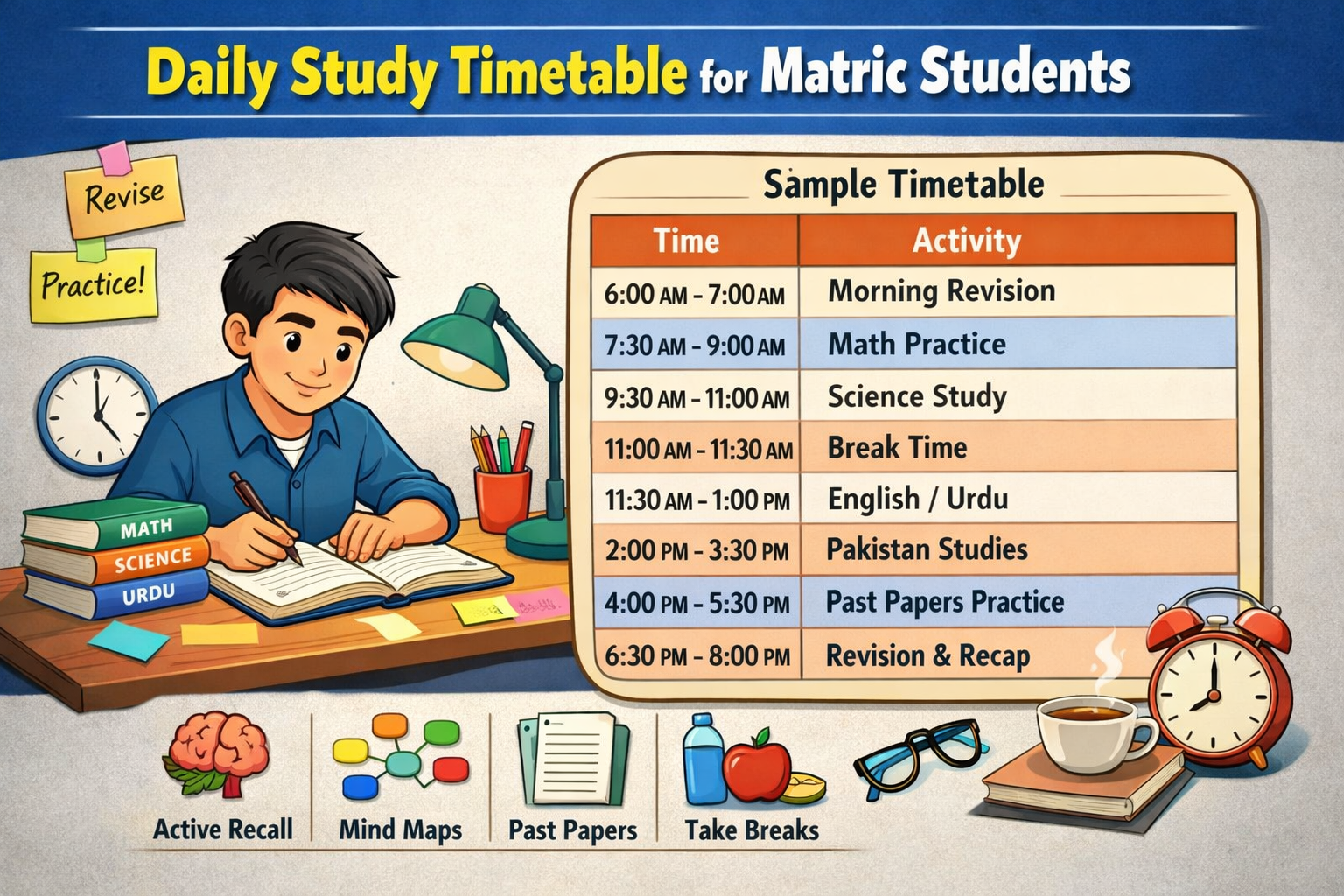
3. Subject-Wise Focus
- Mathematics: Practice formulas, solve numerical problems, and revise previous papers.
- Science: Make diagrams, memorize definitions, and revise key concepts daily.
- English: Focus on grammar, comprehension, and literature summaries.
- Urdu: Practice essay writing, poetry, and comprehension passages.
- Islamiyat & Pakistan Studies: Memorize key points and past paper questions.
4. Incorporate Revision Techniques
- Active recall: Test yourself without notes.
- Mind maps: Create visual summaries for quick revision.
- Flashcards: Use them for definitions, dates, and formulas.
- Past papers: Solve regularly to track improvement.
Also Read About: Best Revision Techniques for 9th and 10th Class Students
5. Maintain Healthy Study Habits
- Keep a quiet and distraction-free study area.
- Drink water and eat healthy snacks to maintain energy.
- Sleep at least 7–8 hours; sleep is crucial for memory consolidation.
- Avoid multitasking during study sessions.
6. Adjust Timetable According to Exam Schedule
- Two weeks before exams, focus more on revision and practice papers.
- Allocate extra time to weak subjects.
- Reduce new topic learning; concentrate on strengthening concepts.
Common Mistakes Students Make
- Overloading study sessions without breaks.
- Ignoring difficult subjects until the last minute.
- Studying in a noisy or distracting environment.
- Cramming entire syllabus at night instead of consistent daily revision.
Tip: Stick to the timetable but remain flexible. Adjust based on progress and energy levels.
FAQs
Q1: How long should a matric student study daily?
A: 5–6 focused hours outside school are recommended, broken into short sessions with breaks.
Q2: Can I study multiple subjects in one day?
A: Yes, but prioritize difficult subjects and mix subjects to maintain focus.
Q3: Should I study in the morning or at night?
A: Choose the time when you feel most alert. Morning study is generally better for memory retention, while night study can be used for revision.
Q4: How can I avoid burnout while following a timetable?
A: Take short breaks, exercise lightly, and maintain proper sleep. Avoid overloading your schedule.
Q5: Is it okay to adjust the timetable daily?
A: Yes, small adjustments are fine, but keep the overall study structure consistent.
Conclusion
A well-planned daily study timetable is the foundation for success in matric exams. By dividing study hours wisely, prioritizing weak subjects, practicing past papers, and revising systematically, students can boost their marks while reducing stress. Remember, consistency beats last-minute cramming.