

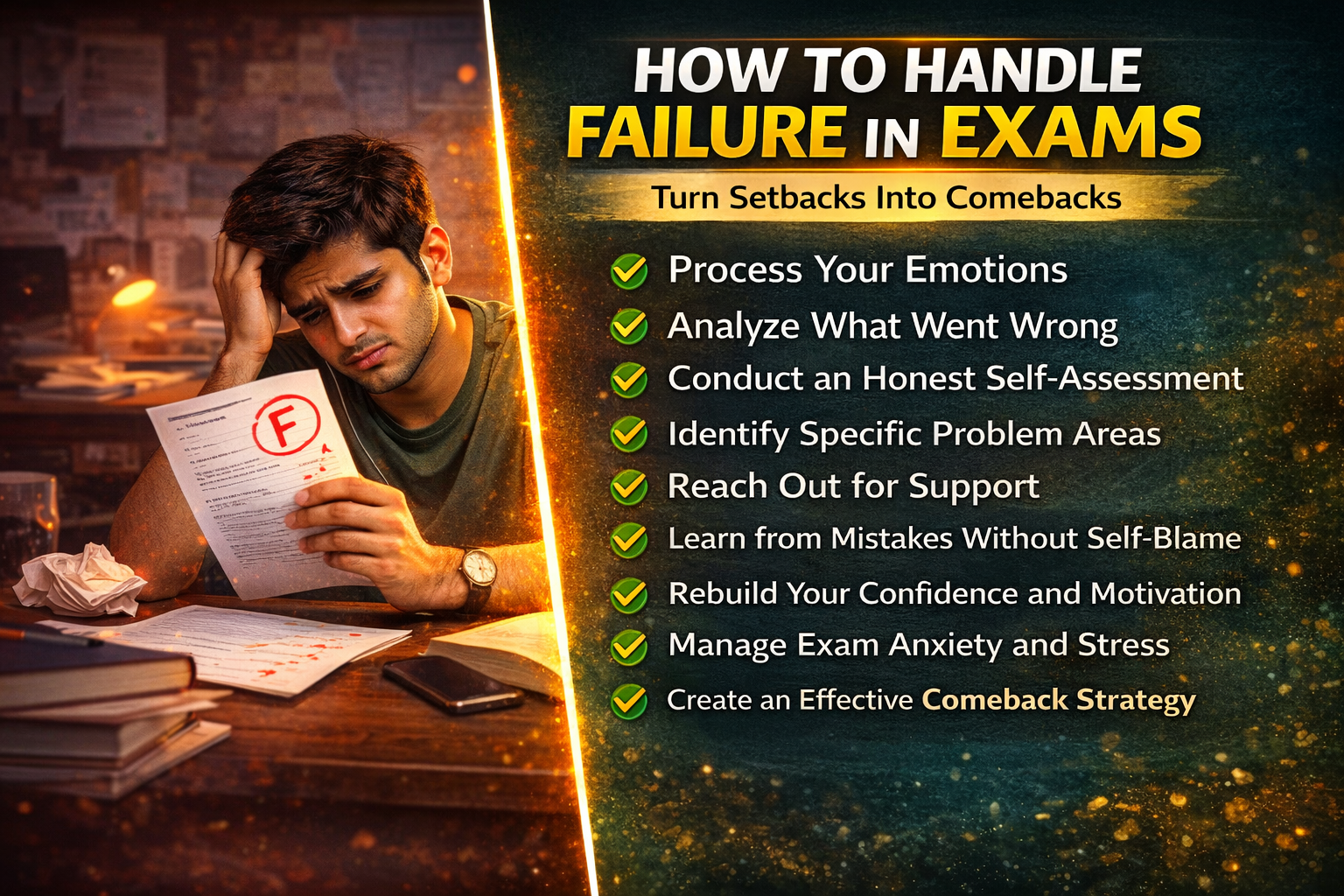
Failing an exam can feel heartbreaking. You may feel embarrassed, scared, or even hopeless. But here’s the truth: exam failure is not the end of your academic journey. Many successful people failed at some point in their lives — and then came back stronger.
If you’re wondering “You failed your exams. Now what?” — this complete guide will help you understand how to bounce back when you fail exams, restart confidently, and avoid repeating mistakes.
First: Stay Calm and Accept the Result
Before planning your comeback, you need to accept what happened.
Failing an exam does not mean:
- You are not intelligent
- You cannot succeed in life
- Your future is ruined
It simply means something in your preparation strategy did not work.
Avoid This Common Mistake
❌ Comparing yourself with toppers
❌ Blaming teachers or the system only
❌ Quitting studies completely
Acceptance is the first step to recovery.
Why Do Students Fail Exams?
Understanding the reason is important before you restart.
Here are common causes among Pakistani students:
- Poor time management
- Studying only before exams
- Relying on guess papers
- Fear and exam anxiety
- Weak basics in subjects
- Social media distractions
- Health or family stress
Also Read About: How to Concentrate on Studies Without Distraction at Home
Ask yourself honestly: What went wrong?
Write your reasons on paper. This small step gives clarity.
How to Bounce Back When You Fail Exams
Now let’s talk about action.
1. Analyze Your Mistakes
Take your result or paper and identify:
- Which subjects were weak?
- Which chapters caused problems?
- Did you leave questions unanswered?
- Was time management an issue?
Make a small improvement table like this:
| Problem | Why It Happened | Solution |
|---|---|---|
| Low Math Marks | Weak Algebra | Daily practice 30 mins |
| Time shortage | Slow writing | Practice past papers |
| Poor memory | No revision | Weekly revision plan |
This method helps you focus on solutions instead of emotions.
2. Talk to Someone You Trust
Do not suffer alone.
Talk to:
- Parents
- A supportive teacher
- Elder sibling
- Close friend
Explain your situation honestly. Most parents in Pakistan get angry at first — but they ultimately want your success.
Communication reduces pressure.
3. Create a Smart Comeback Study Plan
If you want to restart after failing an exam, planning is essential.
Here’s a simple 4-step plan:
Step 1: Fix Your Daily Routine
- Sleep 7–8 hours
- Study in the morning when your mind is fresh
- Keep phone away during study
Step 2: Study in Small Sessions
Use the 45-15 rule:
- 45 minutes study
- 15 minutes break
Step 3: Focus on Weak Subjects First
Do not avoid difficult subjects. Face them daily.
Step 4: Practice Past Papers
Past papers show:
- Important questions
- Paper pattern
- Time management practice
Consistency is more powerful than long study hours.
How to Overcome Exam Failure Emotionally
Failure hurts emotionally. Many students feel:
- Low confidence
- Fear of society
- Shame in front of relatives
Remember:
👉 One result does not define your future.
👉 Many toppers failed once before succeeding.
5 Effective Ways to Handle Failure in Exams
- Stop Negative Self-Talk
Replace “I am useless” with “I can improve.” - Limit Social Media
Avoid comparing your marks with others online. - Exercise Daily
Even 20-minute walking improves focus. - Start Small Wins
Complete one chapter fully. Build momentum. - Visualize Your Success
Imagine passing next exam confidently.
Mental recovery is as important as academic preparation.
How to Restart After Failing an Exam — Ultimate Strategy
If you failed board exams (like 9th, 10th, FSC, or BA), you usually have options:
- Supplementary exams
- Reappear next year
- Improve subjects
Make a Decision Based on:
- Your marks gap
- Your career goal
- Advice from teachers
Do not rush your decision emotionally.
Avoid These Dangerous Mistakes After Failing
Many students make these mistakes:
❌ Dropping out without thinking
❌ Changing field suddenly
❌ Joining random short courses without plan
❌ Giving up on competitive exams forever
Instead, take 2–3 weeks to reflect and plan properly.
Example: Comeback Story Strategy
Imagine Ali failed his 10th class math exam.
Instead of quitting:
- He joined extra tuition for algebra
- Practiced past papers daily
- Reduced gaming time
- Improved writing speed
Next attempt? He passed with 75%.
Improvement is possible when strategy changes.
Mini Self-Assessment Tool
Answer honestly:
- Did I study consistently or only before exams?
- Did I revise properly?
- Was I distracted by phone?
- Did I solve past papers?
- Did I manage time in exam hall?
If 3 or more answers are “No”, your preparation method needs improvement.
What Parents Should Understand (Important for Pakistan)
Parents must:
- Avoid humiliating their child
- Encourage instead of comparing
- Focus on solution, not blame
Support builds confidence. Pressure builds fear.
Long-Term Perspective: Failure Is Feedback
Failure teaches:
- Discipline
- Patience
- Strategy correction
- Mental strength
Many doctors, engineers, and CSS officers failed at some stage.
Success is rarely a straight line.
Frequently Asked Questions (FAQs)
1. How can I overcome an exam failure?
Start by accepting the result, analyzing mistakes, and creating a better study plan. Avoid negative thinking and stay consistent with daily practice.
2. Is failing an exam the end of my career?
No. Many successful people failed exams but later achieved great success. It is a temporary setback, not a permanent failure.
3. Should I change my field after failing?
Only change your field after careful analysis and guidance. Do not make emotional decisions immediately after results.
4. How do I rebuild confidence after failing?
Focus on small daily achievements, improve weak subjects, and avoid comparing yourself with others.
5. Can I succeed after failing board exams in Pakistan?
Yes. Supplementary exams and reattempts give you another chance. With proper planning and discipline, success is possible.
Final Words: You Failed Your Exams. Now What?
Now you:
- Accept it.
- Analyze it.
- Fix your strategy.
- Stay consistent.
- Believe in improvement.
Your comeback story can be stronger than your failure.
Exams test knowledge — not your worth as a human.