
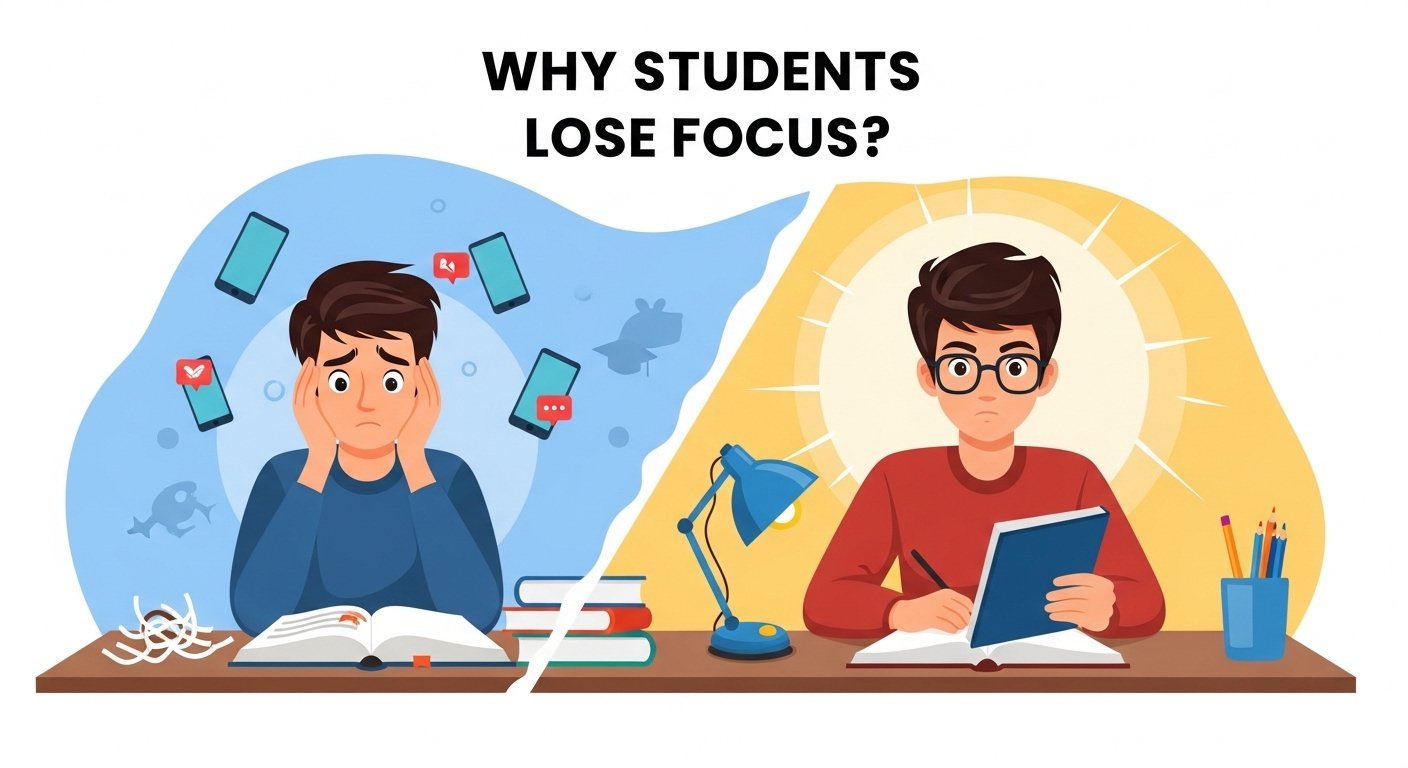
Staying focused while studying is one of the biggest challenges students face today. Whether you are preparing for exams, attending classes, or doing homework, distractions can easily reduce productivity and learning quality. Many Pakistani students struggle with concentration due to academic pressure, mobile phone usage, poor routines, or mental fatigue.
The good news is that focus is a skill — and it can be improved with the right strategies. This article explains Why students lose focus, the real causes of low concentration, and practical solutions to fix it step-by-step.
What Causes Students’ Lack of Attention in Class?
There is no single reason for poor focus. Usually, it is a combination of physical, mental, and environmental factors.
1. Digital Distractions (Mobile & Social Media)
Smartphones are one of the biggest attention killers. Notifications from WhatsApp, TikTok, or games interrupt the brain repeatedly.
Problem: Short attention span develops over time.
Solution: Keep your phone in another room during study sessions.
2. Lack of Sleep
Students who sleep late and wake up early often feel tired in class.
Warning: Sleep deprivation reduces memory, concentration, and reaction time.
3. Poor Study Environment
Noise, uncomfortable seating, or cluttered desks can break focus quickly.
4. Stress and Anxiety
Academic pressure, exams, and family expectations can overload the brain, making it harder to concentrate.
5. Hunger or Poor Nutrition
Skipping breakfast or eating junk food affects energy levels.
Tip: Balanced meals improve brain performance.
Why Students Often Lose Focus in Post-Lunch Classes
Many students feel sleepy after lunch — this is normal due to biological reasons.
Reasons:
- Blood flow shifts toward digestion
- Heavy or oily meals cause fatigue
- Warm classroom environment
- Mental exhaustion from morning lessons
How to Survive Post-Lunch Periods
Here are simple techniques that actually work:
- Eat light meals (avoid oily foods)
- Drink water after lunch
- Walk for 5 minutes before class
- Sit in the front row
- Take quick notes to stay active
Movement and engagement wake up the brain naturally.
How to Overcome Low Concentration and Procrastination
If you struggle with procrastination, you are not alone. Many students delay studying because tasks feel overwhelming.
Step-by-Step Focus Improvement Plan
Step 1: Use the 25-Minute Rule (Pomodoro Technique)
- Study for 25 minutes
- Take a 5-minute break
- Repeat 4 cycles
This method trains the brain to stay focused for short periods.
Step 2: Set Micro Goals
Instead of saying “I will study biology,” say:
- I will complete Chapter 2 diagrams
- I will solve 10 MCQs
Small goals reduce procrastination.
Step 3: Remove Distractions
- Turn off notifications
- Use website blockers if needed
- Keep only study materials on your desk
Step 4: Study at Peak Energy Time
Some students focus better in the morning, others at night. Identify your best time.
Step 5: Reward Yourself
After completing a task, give yourself a reward (snack, break, or phone time).
Rewards motivate the brain.
Special Case: Student Cannot Focus While Reading and Has Poor Coordination
You mentioned a student who:
- Cannot read correctly
- Has poor coordination in sports
- Understands religious studies well
This situation may indicate a learning difference, not laziness.
Possible causes include:
1. Dyslexia (Reading Difficulty)
Students may understand concepts but struggle with reading words accurately.
2. ADHD (Attention Deficit Hyperactivity Disorder)
Common signs:
- Easily distracted
- Difficulty focusing
- Poor organization
- Restlessness
3. Dyspraxia (Coordination Difficulty)
This affects physical coordination and motor skills.
How You Can Help the Student
- Use visual learning methods (charts, videos)
- Allow extra reading time
- Encourage oral learning and discussion
- Break tasks into small steps
- Avoid criticism — build confidence
- Consider professional assessment (psychologist or education specialist)
Important: Many intelligent students have learning differences but succeed with support.
Practical Daily Habits to Improve Student Focus
Here is a simple routine students can follow:
| Habit | Benefit |
|---|---|
| Sleep 7–8 hours | Better memory & attention |
| Exercise 20 minutes | Improves brain function |
| Healthy breakfast | Stable energy levels |
| Study timetable | Reduces confusion |
| Short breaks | Prevents mental fatigue |
Consistency matters more than perfection.
Complete Student Guide: How to Stay Motivated During Long Study Sessions
Mistakes Students Should Avoid
Avoid these common focus killers:
- Studying with TV or music lyrics
- Multitasking with phone
- Long study sessions without breaks
- Cramming at night before exams
- Comparing yourself with others
Focus improves when you reduce mental pressure.
Motivation Tip for Pakistani Students
Remember: concentration is not talent — it is training.
Even toppers lose focus sometimes. The difference is they return to work quickly.
Start small. Improve daily.

FAQs
What causes students’ lack of attention in class?
The main causes include lack of sleep, mobile distractions, stress, poor diet, and boring teaching methods. Environmental factors also play a role.
How to overcome low concentration and procrastination?
Use short study sessions (25 minutes), remove distractions, set small goals, and reward yourself after completing tasks.
I have a student who cannot focus and reads incorrectly. What could be the problem?
It may be a learning difficulty such as dyslexia, ADHD, or coordination disorder. Professional assessment and supportive teaching methods can help significantly.
Why do students lose focus in post-lunch classes?
After eating, the body directs energy toward digestion, causing sleepiness. Heavy meals and warm classrooms increase fatigue.
How can students stay focused for long study hours?
Use breaks, hydration, proper sleep, and active learning techniques like writing notes and solving questions.
Final Thoughts
Losing focus is normal, but staying distracted all the time is not. With the right habits, environment, and mindset, every student can improve concentration and academic performance.
If you are struggling, start with one small change today — better sleep, fewer distractions, or a structured timetable.